
Every jewellery story begins with a moment someone wants to hold onto. For Meera, it began with her grandmother’s bangles. They had been worn at weddings, festivals and quiet Sunday mornings for more than fifty years, and they still gleamed, even though they had passed through many hands and many seasons. Meera wondered how something could look so bright after so long, and her question led her to the workshop of a jeweller in Chandigarh, where the answer began to unfold.
“Gold doesn’t fight with the air,” the jeweller told her, as he polished a small chain under a soft cloth. “Silver turns dark and copper turns green, but gold stays calm. That calm is why your grandmother’s bangles still shine.”
Meera leaned in. She had always thought the shine came from the metal alone, but the jeweller explained that it was really about how the metal behaves over time.
Gold That Could Be Shaped Like Thread
He pulled a thin wire from a drawer and let it catch the light. “Gold can be hammered into sheets so thin that light passes through them, and it can be drawn into wire fine enough to make the most delicate chains,” he said. “That’s why we can create the filigree patterns your grandmother loved. The metal bends where we ask it to bend, and it doesn’t crack.”
Meera ran her fingers along the wire. It felt smooth and surprisingly strong for something so fine.
Why Pure Gold Needed a Helper?
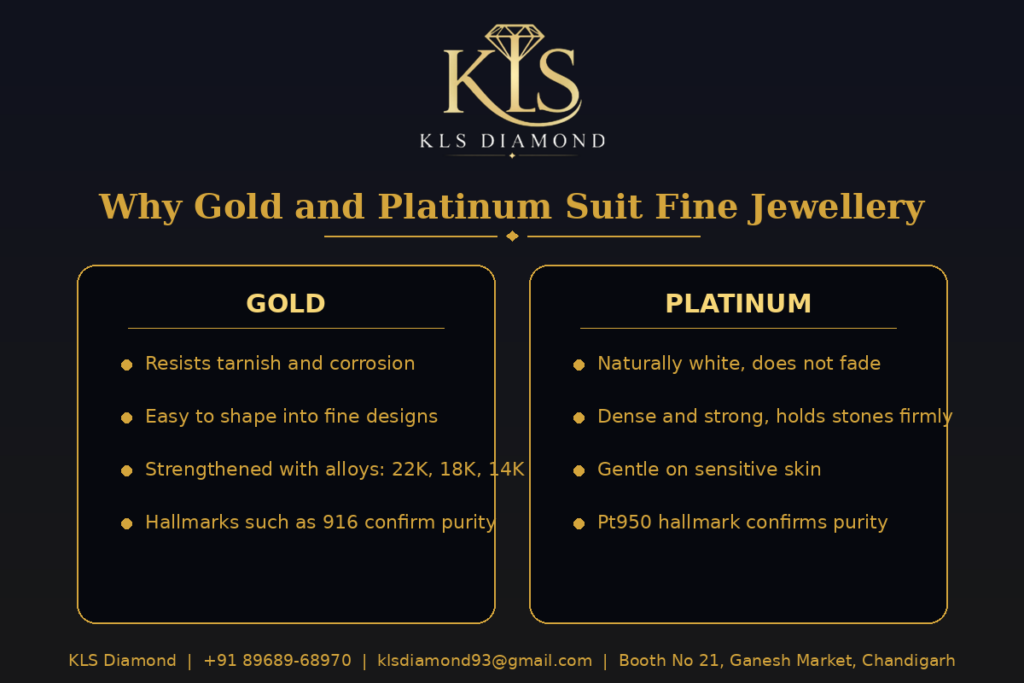
The jeweller then showed her a small gold coin, soft enough to bend slightly in his hands. “Pure gold is beautiful, but it scratches easily,” he said. “So we add a little copper, silver or zinc to make it stronger. That’s how we get 22 carat gold for bangles and necklaces, or 18 carat for modern rings. The number tells you how much pure gold is in the piece.”
He pointed to a tiny stamp on the inside of a bangle. “See this 916? It means the piece is 22 carat. It’s the jeweller’s promise, and it’s the buyer’s protection.”
Meera realised that a piece of jewellery was not just a design. It was also a promise about what the metal really was.
Platinum Enters the Story
Later that afternoon, the jeweller opened a velvet tray that held a platinum ring. It was not yellow like gold. It had a cool, bright white tone that seemed to hold the light rather than reflect it warmly.
“Platinum is heavier than gold,” he said, handing the ring to Meera. She was surprised by its weight. It felt solid, almost reassuring, as if it had been made to stay forever.
“It’s also very rare,” he continued. “Most people who buy platinum rings are choosing something that feels lasting. And because platinum is so strong, it holds diamonds firmly. The prongs keep the stone safe for years.”
The Secret of the Setting
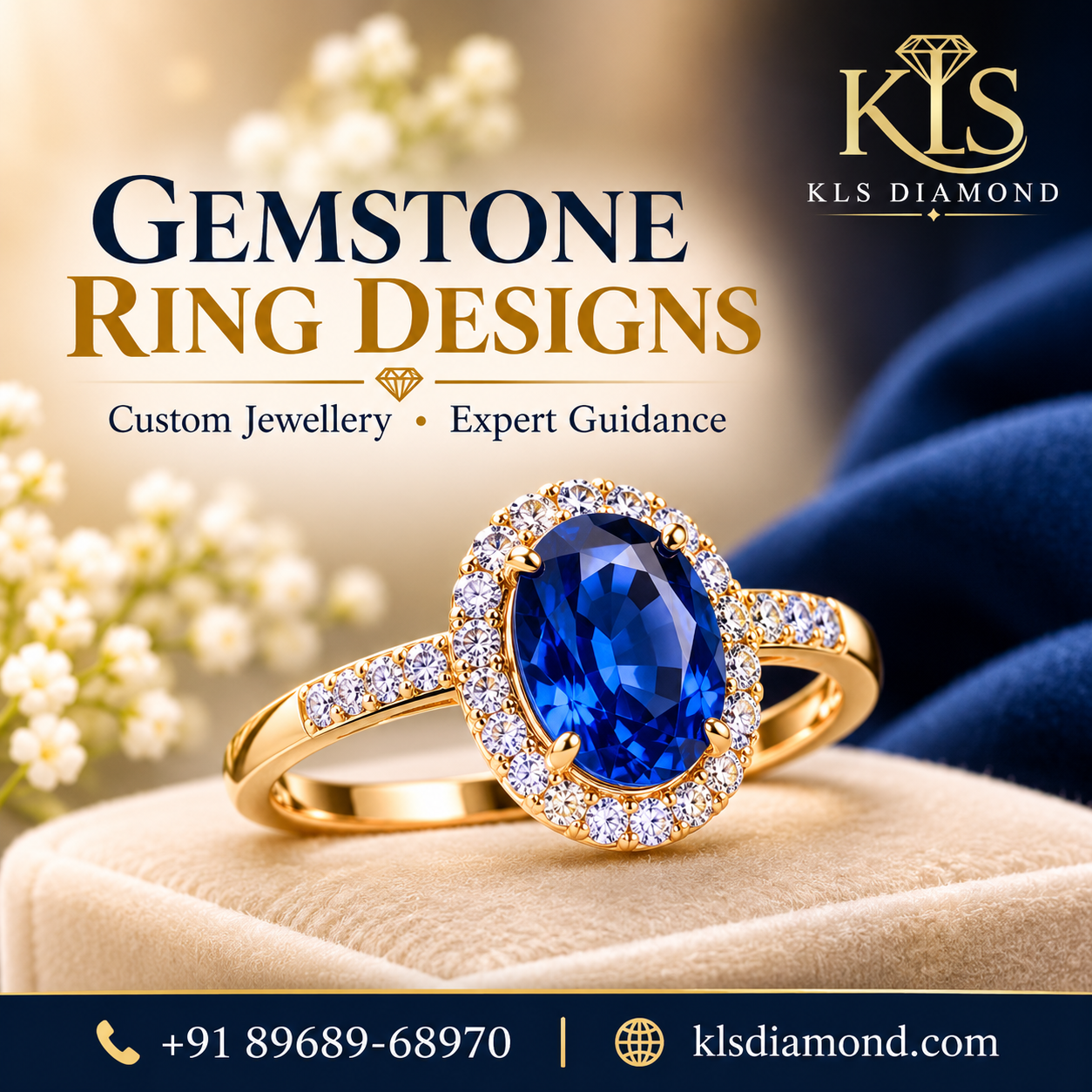
He held the ring up to a small lamp and turned it slowly. “If you look closely, you’ll see that the stone sits on tiny prongs. Those prongs are the most important part of the ring. Platinum is strong enough to keep them firm, so the stone doesn’t loosen easily.”
Meera imagined the years of daily wear, the handshakes, the small knocks against doorframes and steering wheels. The ring still looked perfect.
A Gentle Metal for Sensitive Skin
Meera’s aunt had always avoided certain rings because they left her skin itchy. When Meera mentioned this, the jeweller nodded. “Pure platinum is usually very gentle on the skin. For people with sensitivity, it can be a comfortable choice, especially for a wedding band you’ll wear every day.”
He added that some white gold is plated with rhodium to improve its colour, and that plating can wear down over time. Platinum keeps its white tone naturally, developing only a soft, satin-like patina that many people come to love.
Choosing the Metal That Fits Your Story
By the end of the afternoon, Meera understood why gold and platinum had become the preferred metals for fine jewellery. Gold offered warmth, tradition and a lasting sense of value, the kind that families pass from one generation to the next. Platinum offered strength, a cool modern elegance and a quiet confidence that suited engagement rings and everyday pieces alike.
She looked at her grandmother’s bangles once more. They had survived decades because the metal was chosen with care.
“Both metals last,” the jeweller said gently, “because they were made to last. The choice is simply about the story you want to wear.”
Visit KLS Diamond in Chandigarh
If your own story needs a piece that is honest, valuable and beautifully made, visit KLS Diamond. Our team offers fair prices, transparent processes and professional advice, whether you are buying gold or platinum, selling old pieces, or planning a custom design.